
X
RSS

Blog

Quantum Cryptography: The Next Level of Cybersecurity

As digital threats grow more sophisticated, traditional cybersecurity methods are being pushed to their limits. With the rapid advancement of quantum computing, even the strongest encryption standards may soon become vulnerable. This challenge has given rise to quantum cryptography, a revolutionary approach that promises to redefine how data is protected in the digital age.

Quantum cryptography represents not just an upgrade—but a fundamental shift in cybersecurity.

How Artificial Intelligence and Quantum Computing Are Merging

The technological landscape is evolving at an unprecedented pace, and two of the most transformative innovations—Artificial Intelligence (AI) and Quantum Computing—are beginning to converge. Their merger promises to revolutionize industries ranging from healthcare to finance, enabling solutions to problems that were previously considered unsolvable.

Quantum Computing Explained: Insights from Leading Science Professors

Quantum computing is no longer just a concept in futuristic labs—it is an emerging technology that promises to redefine computing as we know it. By leveraging the principles of quantum mechanics, quantum computers can solve complex problems at speeds unimaginable with classical computers. Leading science professors are shedding light on how this technology works, its potential, and the challenges ahead.

Science Education in the Quantum Era: Preparing the Next Generation of Researchers

The world is entering the quantum era—a time defined by breakthroughs in quantum computing, materials science, cryptography, and advanced simulations. These developments are reshaping industries and redefining scientific discovery. To keep pace, science education must evolve, preparing the next generation of researchers with the skills, mindset, and tools required to navigate this complex frontier.

“How Digital Labs and AI Are Revolutionizing Science Education”

Science education is undergoing a powerful transformation. Traditional classrooms, once limited by physical equipment and fixed lab schedules, are now expanding into digital labs powered by artificial intelligence (AI). These innovations are reshaping how students learn, experiment, and understand scientific concepts—making science education more accessible, engaging, and effective than ever before.

Quantum Sensors: Measuring the Universe with Unmatched Precision

The universe is filled with signals so subtle that traditional instruments often miss them. From tiny shifts in gravity to minute changes in magnetic fields, these invisible forces shape everything around us. Quantum sensors are changing how we detect and understand these phenomena, offering a level of precision that was once thought impossible.

“The Rise of Synthetic Biology: Creating Life in the Lab” By Prof. Deven Choksi

Imagine a world where scientists can design life from scratch, create organisms that produce medicines, clean the environment, or even generate sustainable fuels. This is not science fiction—it is the reality of synthetic biology, a cutting-edge field at the intersection of biology, engineering, and computer science. In the past decade, synthetic biology has transitioned from theoretical research to practical applications, fundamentally changing how we understand and manipulate life.

How Ultra-Cold Atoms Help Test Quantum Theory By Dinesh Choksi

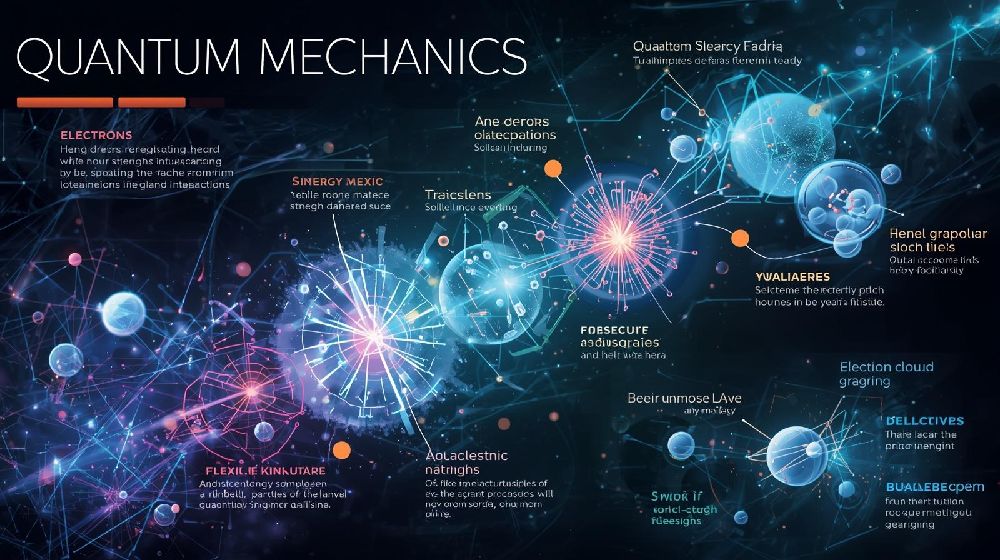
Quantum mechanics governs the behavior of matter and energy at microscopic scales, yet many of its predictions remain counterintuitive and challenging to test. One of the most effective tools scientists use to explore these quantum phenomena is ultra-cold atoms—atoms cooled to temperatures near absolute zero. At such low temperatures, atoms behave in ways that reveal the fundamental rules of quantum physics, allowing researchers to test and verify theoretical predictions with unprecedented precision.

The Intersection of Quantum Physics and Artificial Intelligence

In the rapidly evolving world of technology, two of the most exciting fields—quantum physics and artificial intelligence (AI)—are beginning to converge. While they may seem unrelated at first glance, their intersection promises transformative breakthroughs in computation, problem-solving, and scientific discovery. By understanding how these two domains complement each other, we can glimpse the future of intelligence, technology, and innovation.

Quantum Fluctuations and the Origin of Cosmic Structure By Prof. Dinesh Choksi

The universe as we see it today—a vast expanse of galaxies, stars, planets, and cosmic voids—did not always look this way. Its large-scale structure, from sprawling galaxy clusters to intricate filaments of dark matter, has roots in the tiny quantum fluctuations that occurred in the universe’s earliest moments. Understanding these fluctuations gives us insight into how order emerged from the primordial chaos.